

Human growth hormone (HGH) plays a crucial role in men’s health and wellness, affecting everything from muscle mass to energy levels throughout life. As men age, natural HGH levels decline, leading many to explore growth hormone therapy as a solution for maintaining vitality, building muscle mass, and improving overall well-being.
Key Takeaways
- HGH is an essential hormone produced by the pituitary gland that regulates growth, metabolism, and body composition.
- Growth hormone deficiency can lead to increased body fat, decreased muscle mass, and reduced energy levels.
- HGH treatment through synthetic human growth hormone injections can help restore normal levels under medical supervision.
- Potential benefits include increased muscle mass, reduced body fat, improved bone density, and enhanced athletic performance.
What is HGH?
Human growth hormone (HGH) is an essential hormone produced by the pituitary gland that serves as a master regulator of growth and metabolism in the male body. The pituitary gland releases HGH in pulses throughout the day, with the highest concentrations occurring during deep sleep and exercise (Cleveland Clinic).
HGH works by stimulating the production of insulin-like growth factor-1 (IGF-1) in the liver, which then travels through blood vessels to target tissues throughout the body. This hormone system plays a vital role in maintaining muscle mass, bone density, and proper body fat distribution while supporting overall metabolism and energy levels (National Library of Medicine).
How Does HGH Work in the Male Body?
Growth hormone functions as a powerful anabolic agent that influences multiple physiological processes essential for men’s health. When HGH enters the bloodstream, it binds to specific receptors in muscle, bone, and fat tissues, triggering cellular processes that promote tissue growth and repair.
The hormone stimulates protein synthesis in muscle tissues, leading to increased muscle mass and improved lean body mass over time. HGH also enhances fat metabolism by promoting the breakdown of stored body fat while helping regulate blood sugar levels and supporting healthy cholesterol levels.
As men age, natural GH production begins to decline significantly after puberty, with levels dropping by approximately 15% per decade after middle age. This natural reduction in HGH levels contributes to many age-related changes, including decreased muscle mass, increased body fat, reduced bone density, and lower energy levels (National Library of Medicine).
Human Growth Hormone Benefits for Men
Growth hormone therapy offers numerous potential advantages for men experiencing low levels of this essential hormone. Human growth hormone does more than simple muscle building, encompassing overall health and well-being.
Increased Muscle Mass and Strength
HGH treatment can significantly impact muscle development and physical performance in men with growth hormone deficiency. The hormone enhances protein synthesis within muscle tissues, leading to improved lean body mass and overall strength gains, and provides other benefits, such as:
- Enhanced protein synthesis: HGH accelerates the process of building new muscle proteins.
- Improved recovery time: Faster healing between workouts allows for more frequent training.
- Increased athletic performance: Better strength and endurance during physical activities.
- Growth plate stimulation: Supports continued bone and muscle development.
Plenty of modern research supports the benefits of GH therapy, especially in athletes with diagnosed deficiencies (Harvard Health). For men with such deficiencies, therapy is one of the best ways to address their overall health.
Reduced Body Fat and Improved Body Composition
One of the most notable human growth hormone benefits is its ability to promote weight loss while preserving muscle mass. HGH stimulates lipolysis, the process by which the body breaks down stored fat for energy (National Library of Medicine). That stimulation leads to a cascade of effects, including:
- Targeted reduction of visceral fat around internal organs.
- Improved metabolism leading to increased calorie burning.
- Better distribution of body fat throughout the body.
- Enhanced insulin sensitivity for improved blood sugar control.
Enhanced Energy and Overall Well-being
Men undergoing growth hormone therapy often report significant improvements in energy levels and overall sense of vitality. HGH supports numerous bodily functions that contribute to feeling energetic and maintaining an active lifestyle. In fact, many men claim that HGH therapy leads to:
- Increased energy levels throughout the day.
- Improved sexual function, reduced erectile dysfunction, and stronger libido.
- Enhanced bone density and reduced fracture risk.
- Reduced joint and muscle pain and improved mobility.
- Better sleep quality and natural hormone production.
- Improved mood and mental clarity.

Ready to Optimize your Hormone Levels?
Feel stronger, recover faster, and restore youthful energy—naturally. Let’s get started.
Growth Hormone Deficiency in Men
Growth hormone deficiency affects thousands of men worldwide, creating significant impacts on health and quality of life. This condition, called growth hormone deficiency, occurs when the pituitary gland fails to produce adequate amounts of HGH for normal physiological functions.
Causes and Symptoms of Hormone Deficiency
Several factors can lead to insufficient HGH production in men, ranging from genetic disorders to acquired conditions and even cancer. Damage to the pituitary gland from tumors, radiation therapy, or head trauma represents the most common cause of adult-onset deficiency (Cleveland Clinic).
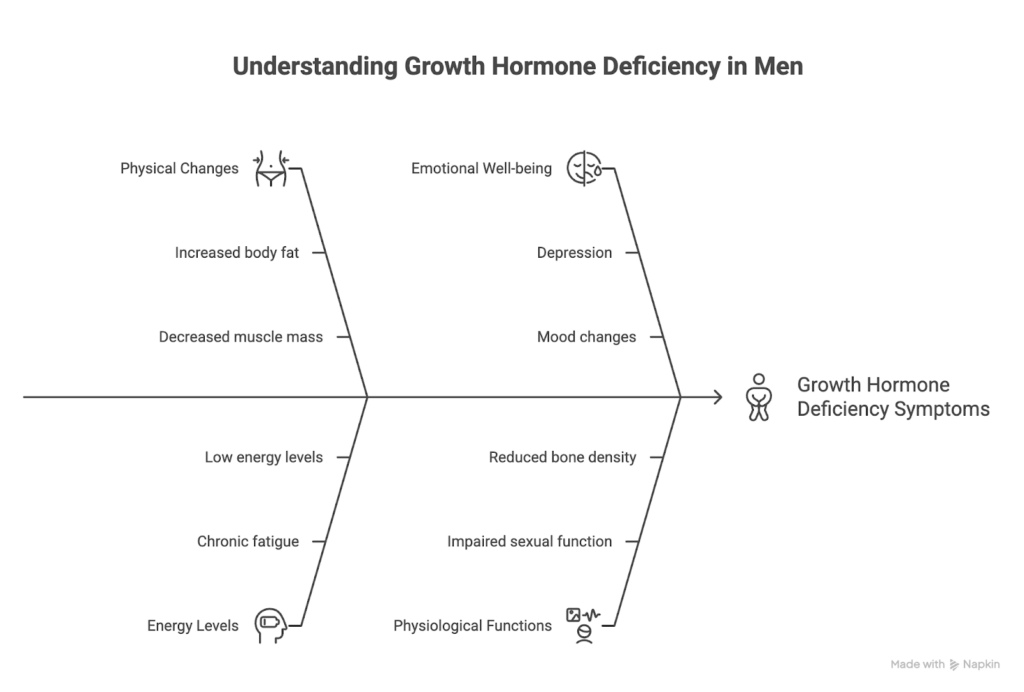
Men with growth hormone deficiency have many of these common symptoms:
- Increased body fat, particularly around the midsection
- Decreased muscle mass and strength
- Chronic fatigue and low energy levels
- Poor growth and development (in younger men)
- Joint pain and muscle pain
- Reduced bone density
- Impaired sexual function
- Depression and mood changes
Diagnosis and Testing for Hormone Deficiency
Accurate diagnosis of growth hormone deficiency requires comprehensive evaluation by a healthcare provider specializing in clinical endocrinology. The diagnostic process typically involves multiple assessments to determine if HGH levels fall below normal ranges.
The evaluation process includes:
- Detailed medical history: Review of symptoms and health conditions.
- Physical examination: Assessment of body composition and development.
- Blood test: Measurement of HGH and IGF-1 levels.
- Stimulation tests: Challenges to assess pituitary gland function.
- Lab report analysis: Interpretation of results by healthcare professionals.
HGH Treatment and Therapy for Men
Growth hormone therapy represents the gold standard treatment for men diagnosed with clinically significant deficiency. Under proper medical supervision, synthetic human growth hormone can effectively restore normal levels and improve quality of life.
Types of HGH Therapy
FDA-approved HGH treatment involves the use of synthetic human growth hormone administered through carefully monitored protocols. Healthcare professionals customize treatment plans based on individual patient needs, hormone levels, and health conditions.
Available treatment options include:
- Synthetic HGH injections: The only FDA-approved form of hormone replacement
- Daily injection protocols: Administered subcutaneously at consistent times
- Individualized dosing: Tailored to achieve optimal hormone levels
- Regular monitoring: Ongoing assessment of treatment effectiveness
It’s important to note that prescription HGH in pill form is not FDA-approved, as the hormone breaks down in the digestive system.
HGH Injections and Administration
Proper injection technique is crucial for safe and effective HGH treatment under medical supervision. Most patients learn to self-administer injections using specialized devices designed for subcutaneous delivery.
HGH Supplements for Men
The market offers various products marketed as HGH supplements, though their effectiveness differs significantly from prescription hormone therapy. Understanding the distinction between supplements and medical treatment is essential for men considering hormone optimization.
Over-the-counter supplements cannot contain actual human growth hormone due to FDA regulations requiring prescription supervision. Instead, these products typically contain amino acids, vitamins, and other compounds claimed to stimulate natural HGH production.
Common supplement categories include:
- Amino acid complexes: Arginine, lysine, and other growth hormone precursors
- Natural hormone boosters: Herbs and nutrients supporting pituitary function
- Anti-aging formulas: Combinations targeting multiple aspects of aging
- Athletic performance supplements: Products marketed to athletes and bodybuilders
However, scientific evidence supporting the effectiveness of these supplements remains limited compared to prescription HGH therapy.
Potential Side Effects and Risks of HGH for Men
Most men tolerate HGH treatment well when properly monitored by healthcare professionals. However, some individuals may experience mild to moderate side effects, particularly during the initial treatment phases (Mayo Clinic).
Frequent side effects include:
- Joint and muscle pain: Usually temporary as the body adjusts
- Fluid retention: Swelling in hands, feet, or face
- Carpal tunnel syndrome: Numbness or tingling in hands
- Injection site reactions: Redness or irritation at injection sites
- Headaches: Often related to dosage adjustments
Serious Health Risks and Contraindications
Long-term HGH therapy carries potential serious risks that require careful consideration and medical monitoring. Men with certain health conditions should avoid growth hormone treatment due to increased risk of complications (Mayo Clinic).
Serious risks and contraindications include:
- Increased risk of certain cancers, particularly if predisposed
- Cardiovascular complications in men with existing heart conditions
- Diabetes complications due to effects on blood sugar regulation
- Sleep apnea worsens in susceptible individuals
- Contraindications for men with active malignancies
Men considering HGH therapy should undergo a thorough evaluation by qualified healthcare providers to assess individual risk factors.
Regulate Your Hormone Levels with Huddle Men’s Health
HGH therapy offers significant potential benefits for men with growth hormone deficiency, from increased muscle mass and improved body composition to enhanced energy levels and overall well-being. However, successful treatment requires proper diagnosis, medical supervision, and ongoing monitoring to ensure safety and effectiveness.
The key to optimal results lies in working with qualified healthcare professionals who can accurately assess hormone levels, develop individualized treatment protocols, and monitor progress throughout therapy. While synthetic HGH represents a powerful tool for addressing deficiency, it’s not appropriate for every man and carries both benefits and risks.
Huddle’s experienced team of men’s health specialists provides comprehensive HGH evaluation and treatment services tailored to your unique needs. Contact us today to schedule your consultation and feel how optimized hormone levels can transform your health and vitality.
FAQs
What is the difference between natural HGH production and synthetic HGH treatment?
Natural HGH is produced by the pituitary gland throughout life, with levels peaking during puberty and declining with age. Synthetic human growth hormone used in medical treatment is bioidentical to the natural hormone but administered through injections to restore normal levels in deficient individuals.
How long does it take to see results from HGH therapy?
Most men begin noticing improvements in energy levels and well-being within 2-4 weeks of starting treatment. Significant changes in body composition, including increased muscle mass and reduced body fat, typically become apparent after 3-6 months of consistent therapy.
Can HGH therapy slow aging and improve longevity?
While HGH therapy can address some age-related changes like decreased muscle mass and increased body fat, current research doesn’t support claims of anti-aging or longevity benefits in healthy individuals. The therapy is most effective for men with clinically diagnosed growth hormone deficiency.
Are there natural ways to boost HGH levels without injections?
Yes, several lifestyle factors can support natural growth hormone production, including regular exercise (particularly high-intensity interval training), adequate sleep, stress management, and proper nutrition. However, these methods cannot fully compensate for a clinically significant deficiency.
What health conditions disqualify someone from HGH therapy?
Men with active cancer, severe heart disease, uncontrolled diabetes, or certain pituitary tumors typically cannot receive HGH treatment. Short bowel syndrome and some genetic conditions may also contraindicate therapy, requiring thorough evaluation by clinical endocrinology specialists.